

Col J P Singh
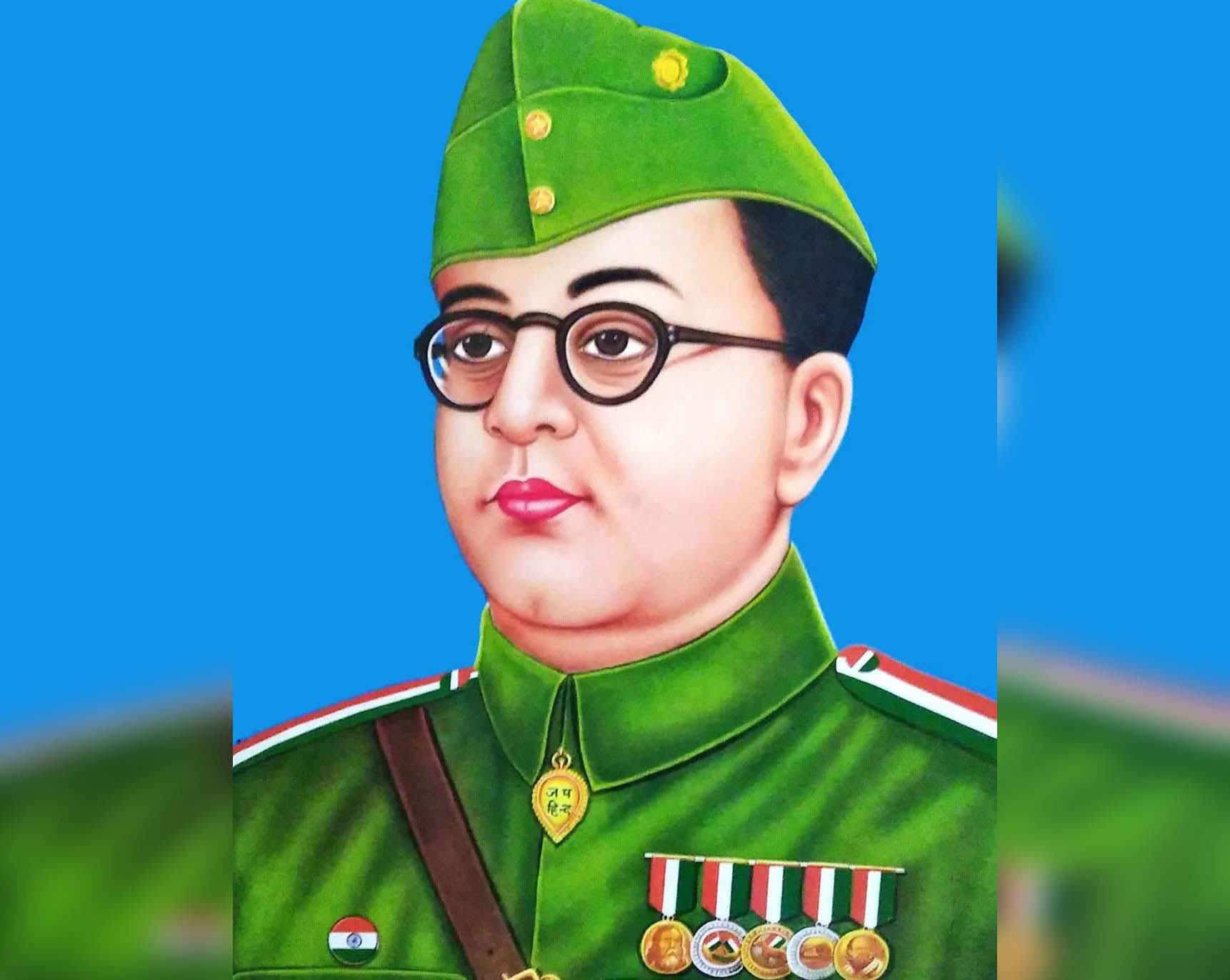
If there was any Indian who vehemently defied the British authority in India and qualifies to be called ‘the greatest nationalist of India’ is indisputably Netaji Subhas Chandra Bose whose 128th birth anniversary falls on 23 January 2025. That made him not only the greatest Indian nationalist of all times but a great civilian war hero as well. It was his enthusiastic initiative of strategically knitting a wartime alliances with Nazi Germany and Imperial Japan, a legacy still remembered. The honorific title ‘Netaji’, meaning a ‘respected leader’ was first given to Subhas Chandra Bose in Germany in early 1942by the Indian soldiers of the Indian Legion (the Soldiers fighting for British but became German Prisoners of War {PWs}),having alleged their loyalty to him. Soon thereafter it became a household name throughout India.
Bose was born into a privileged and wealthyBengali family in Orissa in 1897. He was a recipient of early education in English. After college he was sent to England to take the Indian Civil Services Exam in which he succeeded with distinction but showed reluctance to join ICS citing nationalism to be the higher calling. Returning to India, he joined the nationalist movement led by Mahatma Gandhi. Bose became Congress president in 1938. He was known for his leftist views in Congress. After re-election in 1939, differences arosebetween him and the Congress leaders, including Gandhi, over the future federation of British India and Indian Princes. Bose resigned as president and was eventually ousted from the party.
He formed ‘All India Forward Bloc’ as a left-wing nationalist political party in India that emerged as a faction within the India Congress in 1939. The prime objective of the Froward Bloc was to bring all radical elements of the Congress party on one platform so that he could spread the meaning of complete independence of India with adherence to the application of principles of equality and social justice.
In April 1941 Bose secretly reached in Nazi Germany, where the leadership offered him unexpected but equivocal sympathy for India’s independence. A 3,000-strong Free India Army was recruited from among Indian PWs to serve under Bose. By the spring of 1942, the German army was defeated in Russia. Bose became keen to move to Southeast Asia, where Japan had just won quick victories. He was given a German Submarine in February 1943. Off Madagascar, he was transferred to a Japanese Submarine from which he disembarked in Japan held Sumatra in May 1943.
Netaji was unusually a charismatic driven leader.With Japanese support, he revamped the INA/Azad Hind Fauj. It comprised of Indian PWs captured by the Japanese in the Battle of Singapore. A Provisional Govt of free India was declared on the Andaman Nicobar Island, on 21 October 1943, with Neta ji as its head. He led the INA alongside Japanese to invade India from Burma. In early 1944, three Divisions of the Azad Hind Fauj took part in the attack on the North-eastern parts of India to oust the British.They reached upto the outskirts of Imphal. According to Shah Nawaz Khan, one of the most prominent General of the Azad Hind Fauj, the soldiers who had entered India laid themselves flat on the ground and passionately kissed the sacred soil of their motherland. However Netaji’s soldierly acumen was short-lived.Unfortunately the attempt to liberate India by the Azad Hind Fauj failed.By early 1945, the British Indian Army reversed the Japanese attack on India. After defeat, INA surrendered. Neta Ji chose to enter Manchuria to seek a future in the Soviet Union which he believed to have turned anti-British. But the destiny had something else to offer. Netajidied after his plane crashed in Taiwan on 18 August 1945. Some Indians did not believe that the crash had occurred, expecting Bose to return to secure India’s independence.
Congress, the main instrument of Indian nationalism, did praise Bose’s patriotism but distanced itself from his ideology, rather criticised it and tried to black brush it. After the war was over, British charged 300 INA officers with treason, including my father-in-law, Capt, (INA) Gandharb Singh Bhalwal of village Mishriwala-Pakhian. In the process of trial, they faced dire opposition by the Indians. Consequentlythe Britain hastened the decolonisation of India granting full independence on 15 August 1947.
Legacy of Neta Ji is a mixed bag. Among many in India, he is seen as a hero. He formed Azad Hind Fauj and fought for India’s freedom. He is known for his militant approach that he used to gain independence and for his socialist policies. But his collaborations with Japanese Fascism and German Nazism posed serious ethical dilemmas, especially his reluctance to publicly criticize the worst excesses of German anti-Semitism from 1938 onwards or to offer refuge in India to its victims. Still Subhas Chandra Bose is considered the most influential freedom fighter with extraordinary leadership skills and a charismatic oratory. His famous slogans are ‘Jai Hind’, ‘Delhi Chalo’ and the most significant being ‘tum mujhe khoon do, main tumhe aazadi dunga’.
“I have neither the time nor the inclination to explain myself to a man who rises and sleeps under the blanket of the very freedom that I provided, and question the manner in which I provide it”, a patriotic soldier’s plea, best suits his patriotism and strained relationshipwith Congress.
Commemorating Netaji.
Over the past 11 years, Modi govt has focused on ensuring that the deeds of this great nationalist remains deeply embedded in our collective psyche. PM Modi spared no effort in paying tribute to Netaji’s inspiring legacy.Various efforts undertaken to pay tribute to his legacy are:-
(i) On October 21, 2018, the “Subhash Chandra Bose Aapda Prabandhan Puraskar” award was announced to honour outstanding contributions and services provided in the field of disaster management by individuals and organisations throughout India.
(ii) On December 30, 2018, PM Modi visited the Andaman & Nicobar Islands and recounted the INA and Netaji’s timeless values again. In honour of the 75th anniversary of Netaji’s famous Tricolour Raising on Indian soil, Prime Minister issued a commemorative First Day Cover, Coin, and Postal Stamp. He treasured the memories of the multitude of Andaman youth who reacted to Netaji’s call by dedicating their lives to the freedom movement in India. (An evocative reminder of the historic day in 1943, when Netaji hoisted the Tricolour, is provided by the imposing 150-foot mast carrying the flag). Ross Island was christened after Netaji as ‘Subhas Chandra Bose Dweep’ as a homage to Netaji’s past. That ushered an era of commemorating Netaji.
(iii) A museum inside the Red Fort was inaugurated by Prime Minister Modi on Netaji’s birthday in 2019. It offers an in-depth account of Subhash Chandra Bose and the INA. Red Fort is highly significant to INA history. It proudly displays an array of objects associated with Netaji and the INA, such as his famous wooden chair and sword, uniforms, badges, medals, and other regalia.
(iv) In 2022, the government built a Netaji Statue at Kartvaya Path. Standing 28 feet tall and crafted from jet-black granite, the magnificent monument is located beneath the Canopy adjacent to the India Gate. The govt displayed its unequivocal commitment to eradicating any remnant of the colonial mindset, by renaming Rajpath as Kartavya Path and installing a statue of Netaji at the iconic India Gate.
(v) In a momentous event, in 2023, PM Modi virtually unveiled the plan for the proposed memorial to honour Netaji. The planned site of this monumental memorial is Netaji Subhash Chandra Bose Dweep.
(vi) January 23 is celebrated as Parakram Diwas. This annual event is celebrated across the country by the govt to inspire the country’s citizens, particularly the younger generation to cultivate a strong sense of patriotism to show courage in challenging circumstances like those that confronted Netaji.The magnificent legacy of Netaji is being honoured by the PM Modi-led govt initiatives, which ensure that his values will remain relevant and motivate our Amirt Peedi to reach new heights.In conclusion, Netaji’s profound ideology will continue to inspire India to be a great military power. His dream of liberation still inspires every Indian and hence liberation of illegally occupied Indian soil by neighbours resonates in Indian psyche. No other govt, inour history of independent India, had accomplished such patriotic credential.
(The author has heard stories of valour of INA officers and men from his father-in-law.)
 Follow our WhatsApp channel
