

Excelsior Correspondent
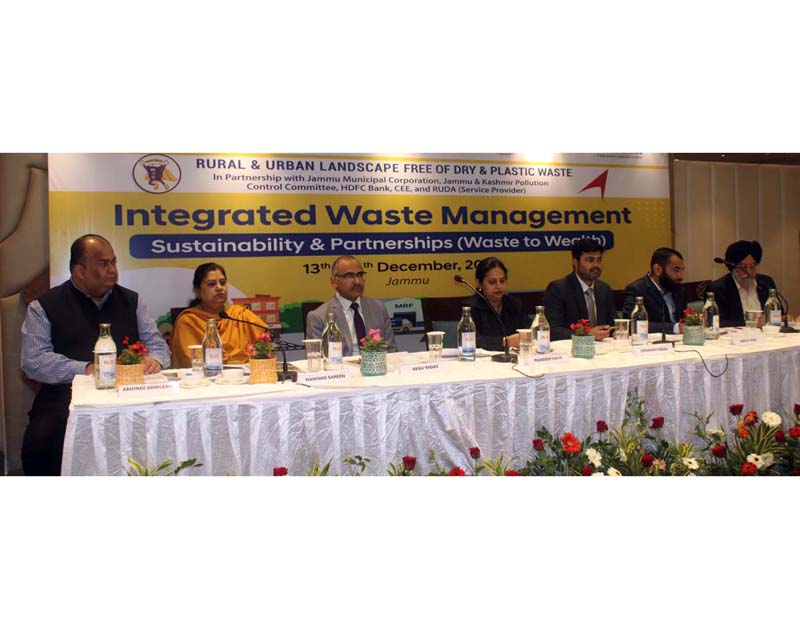
JAMMU, Dec 13: Marking a significant milestone in the journey towards a sustainable future, a two-day knowledge sharing workshop on integrated waste management practices (Waste to Wealth) was organized by the Jammu Municipal Corporation (JMC), in collaboration with the Centre for Environment Education (CEE) and the Regional Urban Development Agency (RUDA), here today.
The workshop was inaugurated by Mandeep Kaur, Commissioner Secretary, Housing and Urban Development Department (HUDD) Jammu & Kashmir, in the presence of Vasu Yadav, Chairman State Pollution Control Committee and Devansh Yadav, Commissioner, JMC.
Renowned experts, policymakers, and more than 20 executive officers from various ULBs across Jammu & Kashmir apart from stakeholders from all over the country came together to discuss sustainable waste management strategies and explore innovative solutions for transforming waste into wealth on the first day of the Workshop. Besides Director Urban Local Bodies Jammu, Joint Commissioners and sanitation staff of JMC also attended the event.
In her address Mandeep Kaur shared how J&K has been steadily progressing in waste management from initial developing mechanism for collection and transportation to creation of processing facilities under SBM 2.0. She broadly highlighted the achievements made by the department so far.
Vasu Yadav shared his views to collaborate with ULBs for enforcing of Pollution Control laws. He stated that lot of improvement in waste disposal is done over the years and hopes to work in coordination with HUDD & Rural Development Department to save the rich aesthetic, wonderful climate of the Jammu & Kashmir.
Dr Devansh Yadav, also holding the charge of Mission Director SBM, stated that there is no scarcity of resources and only will power of the officers of the ULB is required. He said the officers should utilize their services in effective management of waste and enhancing community participation in the Swachhta campaign.
Various experts across the country delved into sustainable business models for solid waste management, emphasizing the importance of multi-stakeholder collaborations. Case studies from Kerala and Baramati illustrated successful initiatives in dry waste management and circular economy practices.
 Follow our WhatsApp channel
