

MUMBAI, Dec 6:
The Reserve Bank of India today kept its key interest rate unchanged but cut the cash reserve ratio that banks are required to park with the central bank, as it did a balancing act between inflation management and supporting economic growth.
Follow the Daily Excelsior channel on WhatsApp
With India’s GDP seeing a sharper-than-anticipated dip in the July-September period to 5.4 per cent — its slowest pace in seven quarters, inflation on the uptick and rupee under pressure, the RBI had few choices to make.
Its monetary policy committee, which consists of three RBI and an equal number of external members, kept the repurchase or repo rate unchanged at 6.5 per cent for a record 11th meeting in a row.
Four of the six members of the panel voted for a status quo in rate, while retaining its policy stance at “neutral”. External members – Nagesh Kumar and Ram Singh – voted for a quarter-point reduction.
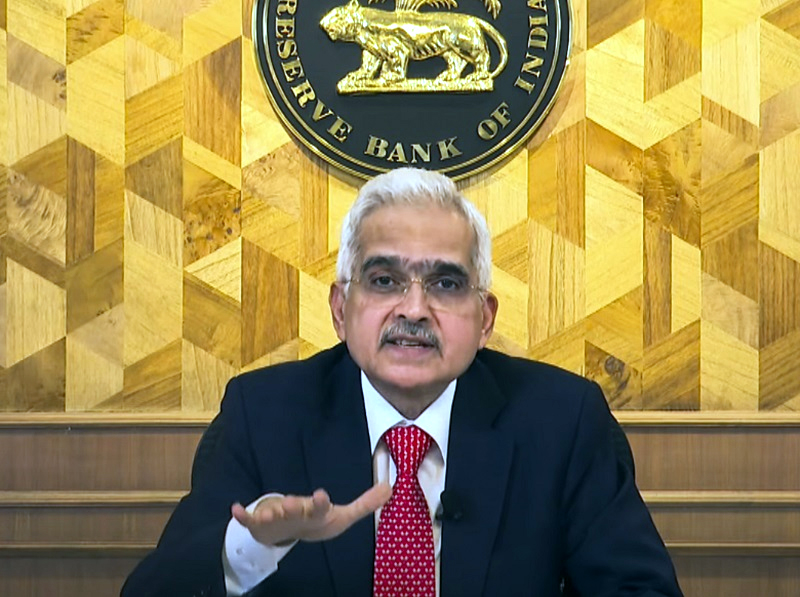
Announcing the monetary policy committee meeting decisions, RBI Governor Shaktikanta Das said the Cash Reserve Ratio — the proportion of deposits that banks must set aside with the central bank — has been cut by 50 basis points to 4 per cent, effective in two tranches on December 14 and December 28.
The cut will infuse Rs 1.16 lakh crore into the banking system and will soften short-term interest rates and enhance capacity of banks to extend credit and invigorates economic activity across sectors.
“At this juncture prudence and practicality demands we remain careful,” Das said. A status quo is “appropriate and essential”, he said, adding if growth slowdown lingers beyond a point, “it may need policy support”.
RBI lowered its growth forecast for the year ending March 2025 to 6.6 per cent, from its earlier projection of 7.2 per cent. This was even though Das said GDP slowdown bottomed out in the July-September quarter and has seen a pick-up in subsequent months due to festival spending and strong agriculture output.
It also raised its inflation forecast for the current 2024-25 (April 2024 to March 2025) financial year to 4.8 per cent, from 4.5 per cent previously.
Inflation has remained above the RBI’s 4 per cent target, with price gains accelerating to a 14-month high of 6.21 per cent in October.
The balance between inflation and growth has gotten “unsettled”, he said, as he called for efforts to ensure that the “credibility” of the flexible inflation targeting regime is “preserved” going forward as well.
“The (inflation) horse has made a valiant effort to bolt, our effort is to keep it on a tight leash,” he told reporters at the customary post-policy press conference.
Das, in his last monetary policy before his second three-year term as Governor ends on December 10 unless it is extended by the government, shunned calls from Finance Minister Nirmala Sitharaman and Commerce Minister Piyush Goyal for lowering borrowing costs.
Das said the central bank will need to wait for data to confirm a decline in inflation.
Back in 2021, when he was last given an extension, the government had announced it more than a month in advance.
“Our effort is to remain in line with the curve, not fall behind the curve,” Das said, drawing from an oft-repeated used by central bank watchers, he said.
“The well-poised character between dynamics of growth and inflation has got somewhat unsettled. Our effort now is to restore that balance which basically means that we want inflation to be brought down closer to the target (4 per cent). We want growth to pick up”.
The RBI governor had in October stated that an immediate interest rate cut can be “very premature” and “very, very risky”, and that he was in no hurry to join the global central banks in easing.(PTI)
 Follow our WhatsApp channel
