

Arun Kumar Gupta
The education system has always played a crucial role in shaping individuals and societies, influencing not only intellectual capabilities but also personal values, culture, and traditions. When comparing the traditional Gurukul education system to the current education system prevalent in schools, the distinctions are striking, reflecting not only different approaches to learning but also varying philosophies regarding the purpose of education. Both systems aim to prepare students for the future, but they do so in fundamentally different ways.
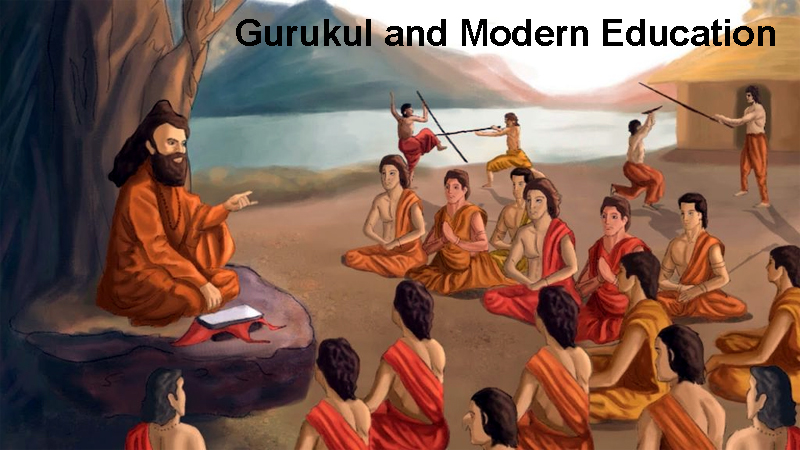
In ancient India, the Gurukul system was the primary form of education. It was rooted in the philosophy of holistic development-where a student, or *shishya*, would live with their teacher, or *guru*, and receive instruction in a broad range of subjects, not only academic but also spiritual, physical, and moral. The idea behind this system was to foster a complete and balanced growth, where intellectual pursuits were combined with ethical training, physical exercise, and spiritual guidance. Education was seen not just as a means to acquire knowledge but as a path to self-realization and an understanding of one’s role in society and the universe.
The subjects taught in the Gurukul system were diverse and extensive. Students were instructed in languages like Sanskrit, which was considered the language of scholars and spiritual texts. Alongside language studies, they were taught mathematics, botany, philosophy, defense, and various practical skills needed for life. More importantly, the Gurukul system placed a significant emphasis on the study of spiritual texts like the Vedas, Upanishads, and ancient epics like the Ramayana and Mahabharata. These texts were not only considered sources of religious wisdom but also offered guidance on ethical living and governance. Through this education, students learned to lead a life of integrity, discipline, and respect for the world around them.
In contrast, the modern education system is largely based on a structured curriculum designed to equip students with specific skills and knowledge necessary for professional success. The focus is on subjects like science, mathematics, social studies, and language, with an emphasis on preparing students for careers in fields such as engineering, medicine, and technology. Unlike the Gurukul system, where the primary objective was to create well-rounded individuals with a deep understanding of both worldly and spiritual matters, the modern education system is largely centered around academic achievements and career-oriented goals.
One of the main differences between the two systems is the role of spiritual and moral education. In the Gurukul system, spirituality was an integral part of the curriculum. Students were taught to meditate, practice yoga, and engage in rituals that connected them to the divine. The purpose of this spiritual training was to help students understand their place in the world, to realize the importance of virtues like honesty, compassion, and self-discipline, and to cultivate a sense of responsibility towards others. This approach was based on the belief that education should not only prepare students for worldly success but also guide them towards a higher purpose in life.
The modern education system, by contrast, tends to prioritize academic knowledge over spiritual or ethical education. While some schools include value education or moral science as part of the curriculum, these subjects are often seen as secondary to core academic subjects. The result is that students may graduate with a strong grasp of science, mathematics, and technology but with little understanding of ethical principles or the deeper questions of existence. This has led to concerns that the modern system is producing individuals who are highly skilled but may lack a sense of purpose or moral grounding.
The medium of Instruction also highlights a fundamental difference between the two systems. In the Gurukul system, students were first taught in their mother tongue, often Sanskrit or regional languages, which helped them stay connected to their cultural roots. This linguistic foundation was seen as essential for understanding the rich spiritual and cultural heritage of India. In contrast, the modern education system, especially in urban areas, often uses English as the medium of instruction. While English proficiency offers global opportunities, it can sometimes distance students from their own cultural heritage, particularly if they lack fluency in their mother tongue or knowledge of their cultural history.
Physical education was another key component of the Gurukul system. Students were encouraged to engage in regular physical activities such as exercise, yoga, and various sports. This focus on physical fitness was based on the belief that a strong and healthy body was essential for a sound mind. Physical training was not merely for health but was also viewed as a means of discipline, self-control, and character building. The idea was that a disciplined body led to a disciplined mind, which in turn enabled greater concentration and intellectual growth.
In the modern education system, physical education is often part of the curriculum, but it is usually treated as a separate subject, not integrated with the overall philosophy of learning. While schools may offer sports and fitness programs, these activities are often extracurricular and do not carry the same weight as academic subjects. Moreover, the emphasis is more on competition and achievement in sports rather than on physical education as a means of personal growth and development.
Despite the apparent successes of the modern education system, particularly in terms of technological and scientific advancements, it is not without its flaws. One major concern is the pressure that students face to perform well in examinations. The focus on grades and academic performance can lead to rote learning, where students memorize information without truly understanding it. This emphasis on exams and standardized testing often discourages critical thinking, creativity, and a deeper engagement with the subject matter.
Additionally, the competitive nature of modern education can have negative effects on students’ mental health. The constant pressure to succeed, combined with the fear of failure, can lead to anxiety, depression, and other mental health issues. In the Gurukul system, where education was more personalized and focused on overall well-being, students were given the time and space to develop at their own pace. The relationship between teacher and student was more intimate, allowing for a deeper understanding of the student’s strengths and weaknesses, and providing guidance that went beyond the academic sphere.
There is also the issue of cultural alienation. With the increasing influence of Western education models, students in modern schools may feel disconnected from their cultural and spiritual heritage. This can lead to a loss of identity, particularly among those who are educated in English-medium schools but lack fluency in their mother tongue. In contrast, the Gurukul system was deeply rooted in Indian culture and traditions, ensuring that students grew up with a strong sense of their identity and their place within the broader cultural and spiritual framework of society.
In recent years, there has been a growing recognition of the need to integrate the best aspects of both systems. The strengths of the Gurukul system-its focus on holistic development, its emphasis on ethics and spirituality, and its personalized approach to education-can complement the modern system’s strengths in science, technology, and professional training. For instance, incorporating yoga, meditation, and moral education into the school curriculum could help students develop not just intellectually, but also emotionally and spiritually.
At the same time, the technical skills and knowledge that the modern education system provides are essential for success in today’s world. Science, mathematics, and technology have brought about unprecedented progress, enabling societies to solve complex problems and improve the quality of life for millions of people. These subjects should continue to be a central part of the curriculum, but they should be taught in a way that encourages critical thinking, creativity, and a deeper understanding of their real-world applications.
Ultimately, a balanced approach to education-one that combines the holistic, value-based education of the Gurukul system with the technical and professional training of the modern system-could be the key to creating well-rounded individuals who are not only successful in their careers but also responsible, compassionate, and grounded in their cultural heritage. Such an approach would recognize that education is not just about acquiring knowledge but about developing the whole person-mind, body, and spirit. In this way, we can create a generation of individuals who are not only equipped to meet the challenges of the modern world but who also understand their responsibility to themselves, to others, and to the world around them.
In conclusion, modern times require an educational approach reminiscent of the Gurukul system, where students are nurtured not only through scientific and technological knowledge but also through a deep understanding of their culture and traditions. A fusion of the Gurukul’s holistic, value-based education with the modern system’s focus on career-oriented skills would create individuals who are not only capable in their professions but also grounded in ethics, spirituality, and cultural identity. This balanced education would ensure that students are well-rounded, both intellectually and morally, and prepared to navigate the complexities of today’s world with a strong sense of purpose and responsibility.
(The author is President of Arya Samaj Dayanand Marg City Chowk, Jammu)
 Follow our WhatsApp channel
