

KATHMANDU, Jun 4 : The fourth edition of the Kathmandu Kalinga Literary Festival (KLF), bringing together leading voices from literature, culture, cinema, music, diplomacy and academia among others, will be held in Nepal’s Lalitpur district on June 6 and 7.
Former prime minister Sushila Karki, who was also the first woman chief justice of Nepal, will be the chief guest at the inaugural ceremony.
The central theme of the festival will be “Beyond Borders: South Asian Literature in a changing world”, according to the organisers.
“The festival will explore how literature, culture, art, spirituality and creative imagination can help build a more connected and compassionate South Asia,” said Rashmi Ranjan Parida, founder and director of the KLF.
“Kathmandu Kalinga Literary Festival is a celebration of literature, culture, music, poetry and civilisational friendship,” Parida said.
“Through this platform we hope to further strengthen the long-standing literary and cultural ties between Nepal, India and South Asia while also opening new avenues for dialogue with the world,” she added.
Various eminent personalities, including singer and actress Ila Arun, author Pratibha Ray, spiritual thinker Acharya Prashant, acclaimed actor, lyricist, and writer Piyush Mishra, and noted writer and filmmaker Raj Shekhar, are scheduled to take part.
The two-day event will feature conversations, panel discussions, poetry recitation, musical performances, cultural sessions and dialogue on civilisational relations.
The KLF, based in Bhubaneswar, Odisha, is one of India’s leading literary and cultural festivals. (PTI)
Kathmandu Kalinga Literary Festival to bring together cultural and literary voices from Nepal, India

India crosses 41 lakh household-mark under rooftop solar scheme, to touch 75 lakh in Dec: Joshi
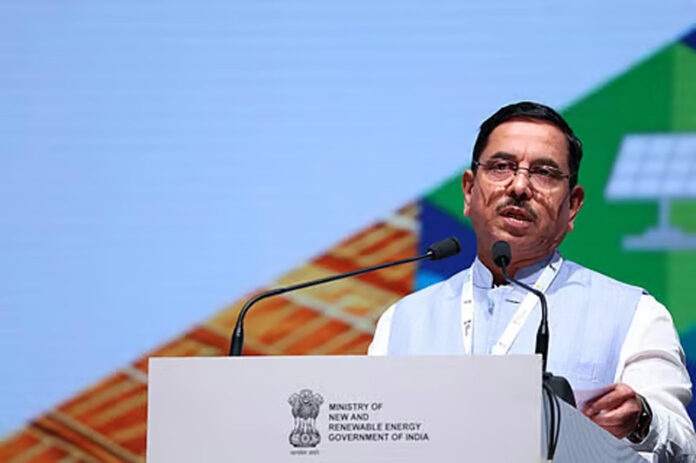
NEW DELHI, Jun 4: New & Renewable Energy Minister Pralhad Joshi on Thursday exuded confidence that India will achieve 75 lakh rooftop solar power households under the PM Surya Ghar Muft Bijli Yojana by December, up from 41 lakh at present.
The government had rolled out the PM Surya Ghar Muft Bijli Yojana in February 2024 with an outlay of Rs 75,021 crore for installing rooftop solar installations and providing free electricity of up to 300 units every month for one crore households.
The scheme provides a central financial assistance (CFA) of 60 per cent of the cost for 2 kW systems and 40 per cent of additional cost for systems between 2 and 3 kW capacity.
The CFA is capped at 3 kW. Beneficiaries under the scheme get Rs 30,000 subsidy for 1 kW system, Rs 60,000 for 2 kW systems, and Rs 78,000 for 3 kW systems or higher.
“PM Surya Ghar Muft Bijli Yojana is transforming India’s energy landscape at an unprecedented pace. In two years, PM Surya Ghar Muft Bijli Yojana has crossed the milestone of 40 lakh solar-powered households. With over 65 lakh applications already in the pipeline and a target of 75 lakh homes in the next 7 months, the pace of adoption is truly unprecedented,” Joshi said on social media platform X.
He stated that the biggest beneficiaries under the utility-led aggregation (ULA) implementation model will be poor and middle-income households, especially families consuming 1-3 KW of electricity.
The overwhelming response from citizens reflects the success of Prime Minister Narendra Modi’s vision of making solar energy accessible to every household.
Earlier, the minister chaired a meeting with officials from several ministries and institutions to take stock of the progress of rooftop solar installations on government buildings.
“Happy to note that around 80 per cent of the installation target has been achieved. So far, 53,874 government buildings have been solarised, with a cumulative installed capacity of 855 MW,” he said on X.
He has directed to ensure that the ministry and department shall designate a nodal officer to fast-track the implementation.
The minister highlighted the need to synergise data for a transparent and consolidated assessment, emphasised closer coordination among institutions, and directed all stakeholders to fast-track implementation.
Earlier, talking to reporters he said the scheme has crossed 41 lakh beneficiaries households in just two years.
“I am hopeful that by the end of 2026, we will cross 75 lakh households, with the ULA model expected to benefit undeserved households using 1-3 kW systems,” he said.
He said rooftop installations have increased from about 7,000 per month before the scheme to over 3 lakh per month.
More than 17 lakh households have achieved zero electricity bills, demonstrating direct savings for families.
He also said beneficiary households have earned over Rs 421 crore by selling surplus solar power back to the grid.
May 2026 was the strongest month since the launch of the scheme, with a record 3.16 lakh rooftop solar installations in a single month and 15,000 added in just one day, he stated.
The pace of adoption has increased dramatically — from 118 days to add one lakh households to less than eight days today.
More than Rs 22,750 crore in subsidies has been disbursed, including Rs 2,743 crore in May 2026 alone, he stated. (PTI )
Master Plans for Tourism Development Authorities yet to come on drawing board

Procedural delays slow roadmap for planned development
*No agency finalized despite repeated official reviews
Mohinder Verma
JAMMU, June 4: Despite repeated official announcements regarding preparation of comprehensive Master Plans for Tourism Development Authorities (TDAs) across Jammu and Kashmir, the exercise has yet to make any significant headway with the administration still to shortlist an agency for the task.
Follow the Daily Excelsior channel on WhatsApp
The delay has slowed efforts aimed at ensuring planned and sustainable development of tourist destinations, even as the importance of having structured growth strategies for tourism hubs has been repeatedly emphasized at the highest levels.
Official sources told EXCELSIOR that following a high-level decision, the Tourism Department, through a communication dated October 28, 2024, approached the Town Planning Organization (TPO) seeking detailed inputs for formulation of separate Master Plans for each Tourism Development Authority.
The Tourism Department sought clarity on the financial implications involved in engaging consultants, the time period required for preparation, the procedure to be adopted and the documents to be furnished by the respective Development Authorities. The Town Planning Organization submitted the requisite details to the Tourism Department but the former was not approached again.
The issue subsequently came under review on November 11, 2024, when Chief Minister Omar Abdullah, while chairing a meeting of the Tourism Department, directed officials to strengthen Tourism Development Authorities and take immediate steps towards preparation of Master Plans for ensuring planned development of tourism destinations.
The matter was again reviewed on February 19, 2025, when Chief Secretary Atal Dulloo stressed the need for structured growth and directed formulation of Master Plans for all Tourism Development Authorities to facilitate systematic and well-planned tourism development.
“However, the process remains at a preliminary stage till date”, sources said while disclosing that no agency has been shortlisted so far for undertaking the exercise. Moreover, the Tourism Department is yet to take a final decision on whether a single agency will prepare Master Plans for all Tourism Development Authorities or separate agencies will be engaged for different authorities.
“The implementation mechanism itself is still being finalized, which has contributed to the delay in moving the exercise forward”, they said, adding considerable time was also spent on deliberations regarding the role of the Town Planning Organization in the preparation of the Master Plans.
Discussions continued for months on whether the exercise should be carried out with active involvement of the Town Planning Organization, which functions under the Housing and Urban Development Department, or be handled independently by the Tourism Department.
“It has now been decided that the Tourism Department will undertake the exercise on its own, but valuable time has already been consumed in resolving procedural issues”, sources further said, adding “the Tourism Department is still in the process of collecting the requisite information from various Tourism Development Authorities, which is required before the planning exercise can formally begin”.
The delay assumes significance as Master Plans are considered critical for guiding future development of tourism destinations by providing a framework for infrastructure creation, land use, environmental protection, visitor management and other key aspects of tourism growth.
“Such plans are necessary to ensure that tourism expansion takes place in a coordinated and sustainable manner, particularly in destinations witnessing increasing tourist footfall”, sources said, adding “with several months having elapsed since the issue was first taken up formally, the absence of visible progress has raised concerns about the pace of implementation of a key initiative intended to shape the future development of tourism destinations across Jammu and Kashmir”.
In the absence of a Master Plan for each Development Authority, the tourism sector will continue to suffer from unregulated growth and infrastructure deficiencies, sources further said, adding, “many Tourism Development Authorities are functioning without a long-term vision, often resulting in haphazard development, ecological strain and poor visitor management systems”.
Without Master Plans, eco-sensitive zones, carrying capacity, infrastructure needs and land-use regulation cannot be scientifically determined, which ultimately hampers the sustainability of tourism in these areas.
It is pertinent to mention here that the purpose of any Master Plan is to promote growth and guide and regulate present and future development of areas with a perspective of 20-25 years, and such a plan is imperative for each and every tourist destination.
UK fire crews battle blaze at Tata Steel’s plant in Wales

LONDON, Jun 4 : Emergency fire crews on Thursday continued to battle a blaze at Tata Steel UK’s steelworks at Port Talbot in south Wales, which a workers’ union said had caused “substantial damage”.
The Mid and West Wales Fire Service rushed several firefighters to the site on Wednesday evening and soon confirmed that on-site workers had all been accounted for and safely evacuated.
The company said emergency services remain on site and are working with local teams to completely “extinguish the fire”.
“The incident is not related to the safe and successful demolition of the empty, redundant Gas Holder earlier yesterday (Wednesday) evening,” reads a Tata Steel UK statement.
“We would like to thank local site teams and the emergency services for their prompt and professional action,” it adds.
Unite workers’ union general secretary Sharon Graham confirmed that no one was injured in the fire after workers were evacuated safely.
“The fire did cause substantial damage to a vital production line. Measures must now be put in place to protect jobs both at Tata and down the supply chain during any period of disruption,” said Graham.
“Meanwhile we are asking Tata and the government to ensure that operations are rebuilt as swiftly as possible,” she said.
Unite’s Wales secretary Peter Hughes added that the union is committed to working with the company to “ensure the long-term future of Port Talbot and the entire Tata operation in the UK”.
Residents based near the steelworks, one of the world’s largest, have been advised to keep windows and doors shut though the air quality is not believed to have been severely impacted.
“Large plumes of smoke are visible in the area. Residents are advised to keep windows and doors closed. Please avoid the area and use alternative routes where possible,” South Wales Police said.
In October 2024, Tata Steel ceased ironmaking at its Port Talbot site and temporarily paused steelmaking pending the construction of a 3.2Mtpa Electric Arc Furnace, due to be commissioned late in 2027 or early 2028.
Meanwhile, the business is expected to import slab and hot rolled coil to support manufacturing and distribution operations at sites across Wales, England and Northern Ireland as well as Norway, Sweden, France, Germany and the UAE.
The Mumbai-headquartered Tata Group expects Tata Steel in the UK would produce net-zero steel by 2045, reducing 30 per cent of its CO2 emissions by 2030.
The Tata Steel Group, pitching itself as one of the world’s most geographically diversified steel producers with operations and a commercial presence across the world, recorded a consolidated turnover of around 26 billion dollars in the financial year ending March 2025. (PTI )
LG attends Rang-e-Kashmir Cultural Festival
Excelsior Correspondent
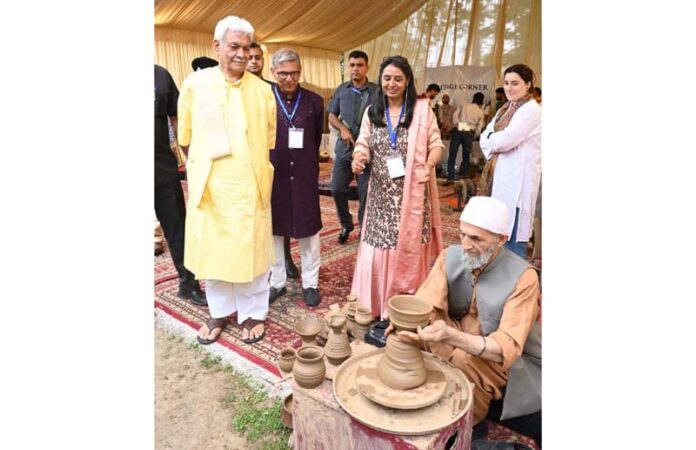
SRINAGAR, June 4: The Lieutenant Governor, Manoj Sinha attended the ‘Rang-e-Kashmir Cultural Festival’ here today. This week-long event showcases J&K’s priceless handlooms and handicrafts and draws both art lovers and buyers.
Speaking on the occasion, the Lieutenant Governor said that Jammu Kashmir is a living canvas, painted with centuries of wisdom, innovation, artistry, and craft.
“A nation’s true strength lies not only in its wealth or might, but also in richness of its spirit, depth of its traditions and the vitality of its culture. India is a land where knowledge blossomed, traditions endured, and culture remained the soul that bound its people together,” the Lieutenant Governor said.
The Lieutenant Governor applauded the efforts of Pumbuch Cultural Heritage Foundation and its Director Superna Sapru, for conserving, nurturing, and reviving Jammu Kashmir’s abundant cultural heritage. He said the mission of foundation, injects new energy into traditions so the voices of our artisans, craftsmen, and traditional artists will continue to resonate for generations to come.
“Culture is not the static artifact of history but in fact it is a living force that shapes our present and guides our future. Jammu Kashmir is home to exceptional artisans who can turn an ordinary piece of wood into something timeless. There are hundreds of esteemed craftspeople who weave thousands of years of cultural stories into fabric. There are papier-mache artisans who carve the very soul of Jammu Kashmir into each piece,” the Lieutenant Governor said.
The Lieutenant Governor stated that there are renowned musicians in Jammu Kashmir who are carrying the region’s melodic traditions.
“These musicians are guardians of our identity, keepers of our memories, and the makers of our tradition’s continuity. This event is a vibrant classroom where tradition and innovation converge, where the old inspires the new, and where people come together to celebrate the diversity that defines us. I believe one of our foremost responsibilities is to connect Jammu Kashmir’s youth with handloom, handicraft, and the arts. The future of our culture rests in youth’s hands and they must be made aware of the invaluable heritage,” the Lieutenant Governor said.
The Lieutenant Governor felicitated various renowned artists for their significant contribution at the event organised by Pumbuch Cultural Heritage Foundation in collaboration with Department of Tourism J&K.
Vikramjit Singh, Commissioner Secretary Industries & Commerce; Superna Sapru, Director, Pumbuch Cultural Heritage Foundation; Akshay Labroo, Deputy Commissioner Srinagar; Masrat-ul-Islam, Director Handicrafts and Handloom, Kashmir; senior officials of police and civil administration, members of Pumbuch Cultural Heritage Foundation and prominent artists and artisans were present.
The Commuter’s Conundrum

The decision by the Jammu and Kashmir Transport Department to cancel Ola’s motor vehicle aggregator licence marks yet another disappointing setback for the region’s public transport modernisation programme. In a Union Territory that proudly boasts a staggering annual tourist footfall exceeding one crore, the complete absence of any nationally renowned, app-based taxi service is both baffling and deeply regressive. While contemporary global destinations leverage digital integration to seamlessly streamline urban mobility, J&K remains frustratingly stuck in a bygone era, failing to match its immense tourism appeal with reliable, modern transport infrastructure. For the millions of tourists arriving each year, this persistent administrative gridlock translates into a major logistical nightmare. Instead of seamlessly booking a ride upon arrival via a smartphone, visitors are forced to physically run here and there and then negotiate endlessly just to secure a basic taxi. The current transport ecosystem is heavily dominated by powerful unions operating at key transit hubs, including airports, railway stations, and bus stands. Holding an absolute monopoly, these syndicates exercise sole discretion over both tariffs and vehicle selection-an archaic practice that goes directly against the fundamental principles of any healthy business. Furthermore, local auto-rickshaws routinely refuse to operate on installed meters, meaning fixed rates are never implemented on the ground.
While other Indian states enjoy the daily convenience of taxi, auto, and two-wheeler rides at reasonable rates, tourists and locals in J&K are left entirely at the mercy of local operators. This systemic failure hurts more than just the commuter experience. These app-based services provide local youth with a vital chance to earn their livelihood in a systematic, dignified manner. There is absolutely no logical reason why four-wheeler, auto and two-wheeler taxi operations should be highly successful in other states but remain an absolute non-starter in J&K.
Admittedly, regulatory compliance is paramount, but the cancellation of operating licences does not instil business confidence among top-tier investors and must always be used strictly as a last resort. The Transport Department must actively encourage a level playing field, keeping customer comfort, commercial viability, and overarching economic factors firmly in mind. With Rapido’s permission currently under process, the Administration has a golden opportunity to rectify this long-standing impasse. It is high time to permanently introduce full-fledged, app-based car, auto, and two-wheeler taxi services. Doing so will ensure J&K finally moves forward into the modern digital age transportation, benefiting visitors and residents alike.
11 killed in fire at elderly care home in Sri Lanka
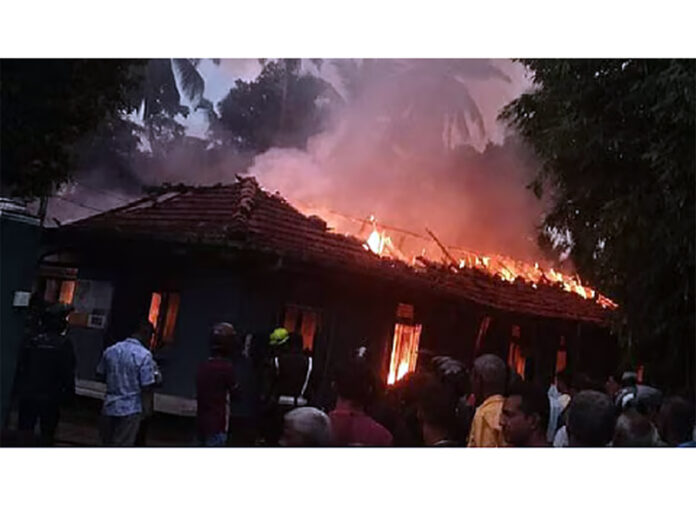
COLOMBO, Jun 4 : At least 11 people were killed and seven others injured after a fire broke out at an elderly care home in Sri Lanka, police said on Thursday.
The blaze erupted at around 5:30 pm on Wednesday at the Mawpiya Sevana Elderly Care Home in Anguruwatota, about 65 km southeast of Colombo, in Kalutara district.
Police said 10 residents were found dead at the premises, while another succumbed to injuries after being admitted to the Horana Base Hospital.
A total of 51 residents were rescued from the facility, while seven injured persons remain hospitalised.
The fire was doused with the assistance of residents and police.
A magisterial inquiry has been ordered into the incident.
Initial reports said a gas cylinder exploded during the incident, contributing to the rapid spread of the flames. However, officials said the exact cause of the fire has not yet been determined.
According to newsfirst.lk news portal, the rescued residents have been temporarily accommodated at a nearby school, and arrangements are being made to relocate them to a safer facility. (PTI )
Cloudburst triggers flash flood in Mahore; damages 7 houses, road
Rain lashes region, windstorm hits Kathua
*Power supply snapped in many areas
Gopal Sharma
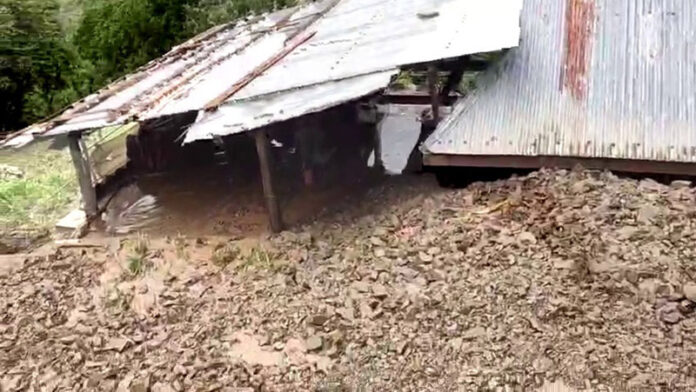
JAMMU, June 4: At least half a dozen houses were damaged and Mahore-Gulabgarh road was blocked due to mudslides, after a suspected cloudburst triggered flash-flood in Mahore Sub Division of district Reasi; the tin roofs of several houses were uprooted due to windstorm in border belt of Kathua and Samba while light to moderate rain lashed many parts of Jammu region this evening.
Follow the Daily Excelsior channel on WhatsApp
Reports said due to cloudy weather conditions and gusty winds , the helicopter service to Mata Vaishnodevi Shrine from the base camp Katra, was also disrupted for about two hours in the afternoon, however, it was restored in the evening. The battery car service and onfoot pilgrimage, however, continued uninterrupted.
Official sources told the Excelsior that at least seven houses and two water mills were partially damaged due to flash flood amidst after heavy rain and cloudburst at Bathoi village in remote Gulabgarh area of Mahore Sub Division of Reasi on Thursday afternoon. Due to mudslides, Mahore-Gulabgarh road was also blocked. However, it was restored in the evening. Click here to watch video
Sources said people of the area claimed that after cloudburst on the mountain, the flash flood occurred and caused damage to the houses. However, the Sub Divisional administration claimed that it was an incident of flash flood as area received heavy rain for about an hour. The flash flood brought huge volume of debris/ mudslides from the mountain that damaged their houses. Even water and mud entered many houses and caused damage to the structures and the goods kept inside. At least five cattle-shed perished in the flash flood.
The SHO Mahore along with police force and the officials from local administration visited the affected village and supervised the relief and rescue operation. Fortunately, no loss of life has been reported in the incident. But some cattle were said to be missing.
Lt Governor Manoj Sinha posted on X,” Spoke with the DC Reasi to assess the situation, following an incident of cloudburst at village Bathoi. While several houses suffered damage, fortunately, no casualties have been reported. I have directed the DC to immediately provide assistance and relief to the affected families.”
This is fifth cloudburst in Jammu region in past three days. Four cloudbursts were reported in three districts — Doda, Kishtwar and Poonch — in Jammu region on Tuesday, triggering flash floods and road blockades in several areas, though no loss of life or property was reported, officials said.
Mahore Sub Division experienced moderate to heavy rain today while adjoining areas of Ramban, Udhampur, besides, Doda, Bhaderwah and Kishtwar area light to moderate rain. However, roads remained open despite rain. Even Jammu-Srinagar National Highway remained operational.
Jammu city and its adjoining areas also experienced light to moderate rain this evening while gusty winds in plain areas caused damage to the power infrastructure. Power supply not only in Jammu, but also in Samba and Kathua areas remained disrupted for several hours. The tin roofs of several houses in border belt of Kathua and Samba were reportedly uprooted due to strong winds.
The rain has brought down the temperature and provided respite to the people from hot weather condition during the day today. The day temperature continued to remain below 38 degree Celsius during last three days in Jammu due to evening thundershowers. A drop in the temperatures has been witnessed in Jammu, Katra, Bhaderwah, Reasi, Udhampur, Batote, Doda and other places.
Meanwhile, a MeT official has predicted one or two spells of rain/thundershower/ hailstorm /gusty winds at most places of the region with brief intense showers at a few places. He said on June 6 the weather will remain generally cloudy with brief moderate rain at scattered places. The weatherman further predicted hot and dry weather from June 7 to 12.
Div Com reviews flood preparedness, heatwave management
Excelsior Correspondent
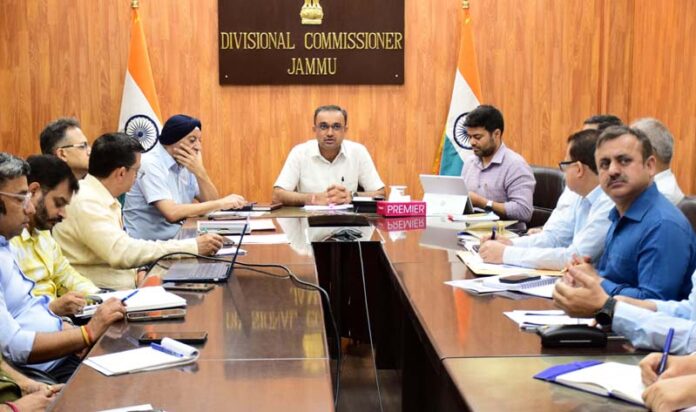
JAMMU, June 4: Divisional Commissioner Jammu, Ramesh Kumar today reviewed department- and district-wise flood preparedness and heatwave management across Jammu Division.
The meeting was attended by Managing Director JPDCL, Commissioner JMC, Deputy Commissioners from Jammu Division, Director ULB, Director Food Civil Supplies, Director Health, Chief Engineers of JPDCL, Jal Shakti, PWD, UEED and PMGSY, Joint Director Information (Jammu), Regional Officer NHAI and concerned officers from NHIDCL and Fire and Emergency Services.
During the meeting, the Divisional Commissioner sought details of steps taken by district administrations and heads of departments regarding flood preparedness ahead of the forthcoming monsoon.
He directed Deputy Commissioners to establish district-level control rooms for quick response, restoration of essential services and flood mitigation. He asked them to constantly monitor water levels in rivers and other water bodies in their respective districts. The Deputy Commissioners of hilly districts were directed to deploy expert teams to assess slope stability in vulnerable areas and take necessary precautionary measures in advance.
Reviewing department-wise preparations, the Divisional Commissioner directed Commissioner JMC to complete the desilting and cleaning of nallahs and the drainage system in Jammu city. He directed that men and machinery be designated for vulnerable and low-lying areas to mitigate waterlogging and prevent flood-related damage.
Necessary directions were issued to the Mechanical Department, PMGSY, BRO, NHAI and NHIDCL to keep roads and bridges open for smooth connectivity.
Director Health Services informed the Divisional Commissioner that sufficient medical supplies have been dispatched to district hospitals, PHCs and CHCs to prevent the spread of waterborne and vector-borne diseases.
The Divisional Commissioner also reviewed heatwave management and directed the Health Department to regularly issue advisories on heatwave precautions and dos and don’ts for the general public.
Chief Engineer JPDCL informed that an adequate number of transformers, poles and conductors have been stocked at key locations and Quick Response Teams have been deployed to ensure immediate power restoration in the event of floods or heavy rains.
All Deputy Commissioners were directed to identify landslide- and flood-prone areas in their districts and prepare mitigation plans accordingly. They were also directed to conduct training for Civil Defence volunteers and organise mock drills with the participation of local communities.
Director Food, Civil Supplies and Consumer Affairs informed that adequate stocks of ration and essential commodities are being maintained across all districts of Jammu Division.
The Divisional Commissioner directed all heads of departments to prepare a detailed flood preparedness plan and keep their men and machinery ready to undertake mitigation measures and restore public services at the earliest.
SEC to finalize SOP for DDC, Panchayat elections shortly
Two days long review meetings conclude
Excelsior Correspondent
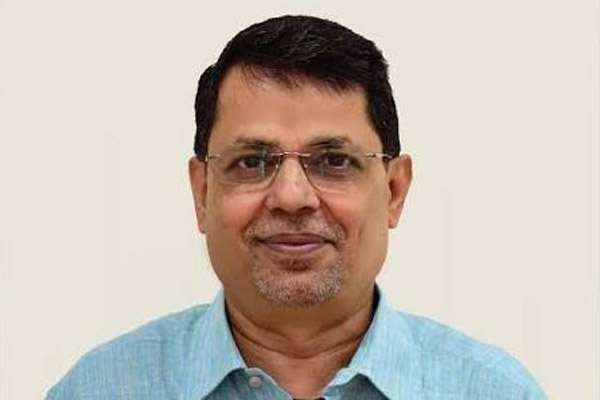
JAMMU, June 4: State Election Commissioner Shantmanu today concluded two days long discussions with Deputy District Election Officers and others on preparations for Panchayat and District Development Council (DDC) elections in Jammu and Kashmir.
Follow the Daily Excelsior channel on WhatsApp
Yesterday, the SEC met the officers of Jammu division while today he held meeting with officers of Kashmir division in online mode.
Later, he left for Srinagar for interaction with the senior officers to discuss preparedness for the polls.
In December 2020 when first-ever elections were conducted to the DDCs, some Panchayat seats were vacant and polling to them was held simultaneously with the DDCs.
“These officers have experience for conducting simultaneous elections to DDCs and Panchayats which they will share with the SEC since this is for the first time that the Commission proposes to hold both elections together,” the sources said.
Holding Panchayat and DDC elections together means the people voting for three candidates simultaneously i.e. Sarpanch, Panch and DDC member.
“This is the cumbersome process and the SEC is working on formulation of Standard Operating Procedure (SOP) which will have all details pertaining to smooth conduct of the elections,” the sources said.
The SOP will be finalized by the Commission shortly in consultation with the concerned officials, they added.
The Panchayats ceased to exist in Jammu and Kashmir on January 9, 2024 and the UT is without the elected Panchayats for past over two years now.
Similar is the case with the Municipalities which completed their term in October-November 2023. Term of the Block Development Councils (BDCs) was co-terminus with the Panchayats and their tenure also ended on January 9, 2024.
Tenure of the District Development Councils (DDCs) ended on February 24, 2026.
Now, the Jammu and Kashmir is without the elected Local Bodies with all three tiers of the Panchayati Raj Institutions (PRIs) non-existent.
The SEC recently concluded voter revision exercise for Panchayats in Jammu and Kashmir in which number of electorates went up to 72.24 lakh.