

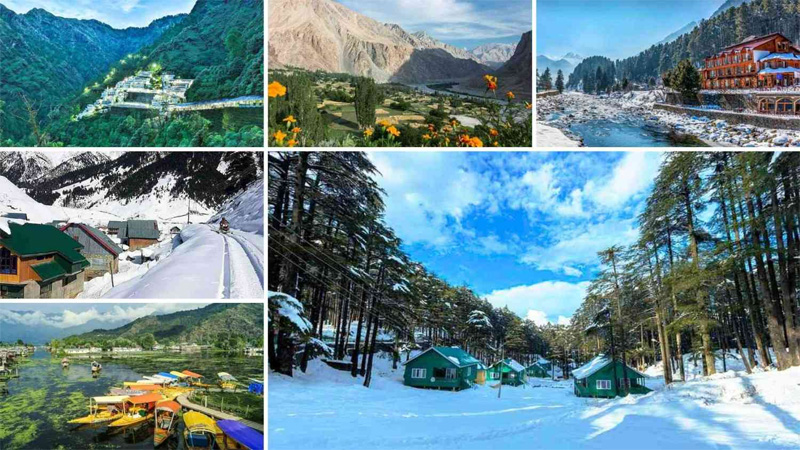
Strengthening governance mechanism of tourist destinations
*Enforcement wings weak, no localisation of best practices
Mohinder Verma
JAMMU, Jan 19: The much-touted exercise to overhaul the governance mechanism of major tourist destinations in Jammu and Kashmir Union Territory has failed to take off on the ground, with the high-level committee missing its 45-day deadline and no holistic framework prepared so far, raising serious concerns over administrative intent and institutional accountability.
Follow the Daily Excelsior channel on WhatsApp
Vide Government Order No.1984-JK(GAD) dated November 26, 2024, a committee comprising of senior officers of the Finance, Housing and Urban Development, Tourism, Planning, Development and Monitoring, Revenue and Law, Justice and Parliamentary Affairs Departments was constituted to prepare and suggest a roadmap along with holistic framework for strengthening the governance structures of selected Tourism Development Authorities.
It was mentioned in the order that while preparing the empowered framework, the committee shall keep in consideration challenges/issues from past learning; financially viable governance structures; balancing the developmental needs with ecological sustainability and carrying capacity of ecosystem; understanding the best practices/ success from across India/world and localizing those practices; limiting the role of Government to basic/essential infrastructural requirements for supporting development while facilitating private developers subject to strict, fair and transparent enforcement/ regulation and an empowered organization with in-built check and balance mechanism.
The committee was mandated to submit a comprehensive report within a period of 45 days. However, more than one year after the deadline lapsed, the core objectives of the exercise remain largely unaddressed, official sources told EXCELSIOR.
“A key failure of the exercise is the continued absence of proper enforcement wings with adequate manpower in the majority of Tourism Development Authorities. This issue, which was expected to be at the heart of the proposed framework, continues to cripple on-ground regulation”, sources further said, adding “without sufficient enforcement staff, Tourism Development Authorities remain largely ineffective in checking illegal constructions, encroachments, land-use violations and unregulated commercial activity in sensitive tourist zones, effectively rendering governance mechanisms ornamental”.
“While some attention is being paid to environmental considerations during the creation of new tourism assets and amenities, there is no holistic approach to balancing development with ecological sustainability and the carrying capacity of fragile ecosystems”, they said, adding “despite being a central term of reference, issues such as destination-specific carrying capacity, environmental load assessment, waste management stress and water availability have not been integrated into a unified planning framework, increasing the risk of irreversible ecological damage”.
Sources further reveal that either best practices from across the country and abroad have not been seriously studied, or those examined have not been localised to suit the unique geographical and ecological realities of Jammu and Kashmir.
The absence of proven governance models ranging from autonomous destination authorities to technology-driven monitoring systems has diluted the very purpose of constituting the committee having representation from all the concerned departments of the Government.
“The mandate to facilitate private developers while limiting the Government’s role to essential infrastructure and transparent regulation has also failed to translate into policy clarity. There is no visible roadmap for investor facilitation, streamlined approvals or predictable regulatory mechanisms, perpetuating uncertainty in the tourism sector”, sources remarked.
What was envisaged as a transformative reform to introduce financial viability, accountability and checks and balances in tourism governance is now at risk of becoming another file-bound exercise.
“With tourist footfall increasing sharply and pressure mounting on fragile destinations, the absence of a robust governance framework threatens not only sustainable tourism growth but also the ecological assets that form the backbone of J&K’s tourism economy”, sources said.
 Follow our WhatsApp channel
