

Nawshaba Iqbal
SRINAGAR, Dec 24: Fifteen crafts from Kashmir have received Geographical Indication (GI) registration, while six more-including copperware and silverware-are currently under evaluation, as the Handicrafts and Handloom Department intensifies efforts to protect traditional crafts and curb fake imitations.
Click here to watch video
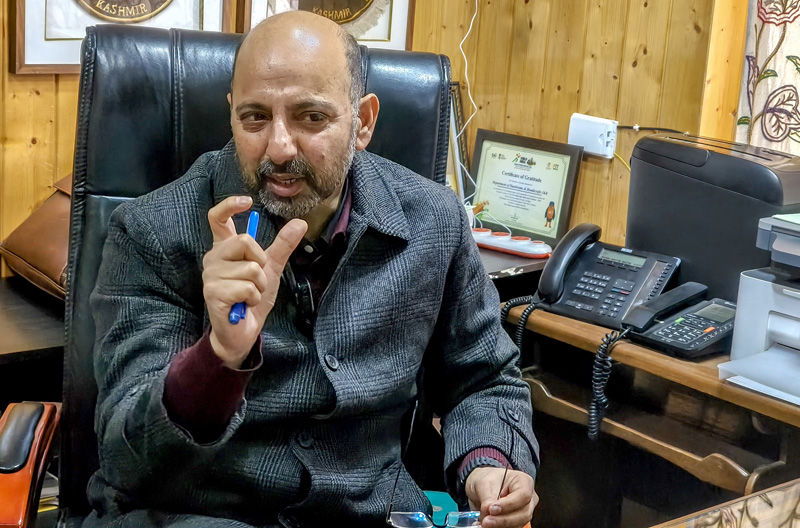
Director Handicrafts and Handloom, Musarrat Zia, told ‘Excelsior’ that GI tagging is being pursued as a key legal tool to establish the authenticity and origin of Kashmir’s handicrafts.
“GI registration is not automatic. It involves a detailed legal and technical process under the Geographical Indications of Goods Act, 1999. Registrations are granted by the GI Registry headquartered in Chennai,” Zia said.
Each craft requires a comprehensive dossier, with the origin of the product being the most critical claim.
“The dossier is examined by the registry and placed in the public domain. If objections are raised, we respond and present our case before the GI committee,” he said.
Zia said the process generally takes around two years, involving scrutiny at multiple stages before approval.
“Only after the registry is satisfied about the origin and method of production is GI registration awarded,” he added.
He said that Kashmir’s hand-knotted carpet was granted GI status based on its unique ‘Taaleem’ system-a coded weaving script that guides colour patterns and design formation.
“This system distinguishes Kashmiri carpets from similar products made elsewhere,” he said. He said the department is expediting pending cases and aims to secure at least three additional GI registrations before March 2026.
On enforcement, Zia said action has been intensified against the sale of machine-made items being passed off as handmade.
“We have sealed showrooms, blacklisted traders, issued notices under the Registration of Tourist Trade Act, 1978, and imposed penalties wherever violations were found,” he said.
Buyers have been advised to insist on GI-labelled products, particularly while purchasing high-value items such as hand-knotted carpets, pashmina and sozni shawls.
“GI-labelled products carry QR codes that can be verified through authorised testing centres. Carpet testing is available at the Indian Institute of Carpet Technology, while pashmina testing is conducted at the Pashmina Testing and Quality Certification Centre,” Zia said.
 Follow our WhatsApp channel
