

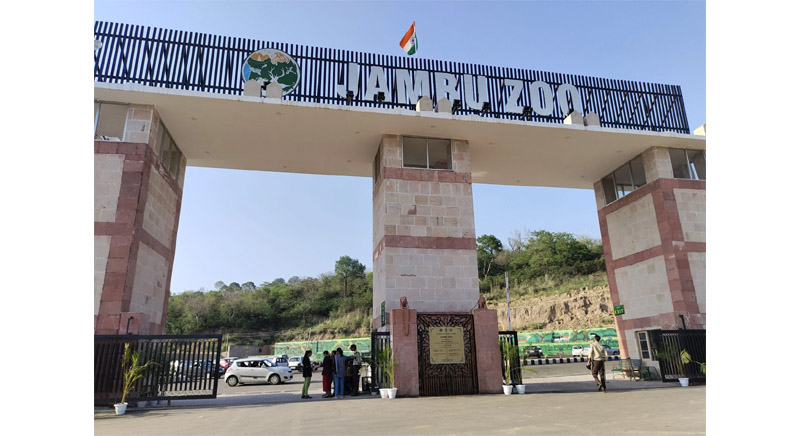
Hyena, Jackal, Hippopotamus, other animals to be kept
*Visitors to shortly get high quality facilities at Gharana
Mohinder Verma
JAMMU, Oct 3: From the beginning of next year, Jambu Zoo will start playing host to several new animals like Hyena, Jackal, Hippopotamus etc as 10 more enclosures will be completely ready by ending December 2024 and discussion has been initiated with the donor zoos in different parts of the country. Moreover, visitors will shortly get high-quality facilities at Gharana Wetland where the migratory birds will start arriving from different countries by early next month.
Click Here To Join Daily Excelsior on WhatsApp And Get Latest News
Official sources told EXCELSIOR that as the work on 10 new enclosures at Jambu Zoo will be completed by ending December this year, the Wildlife Department has approached different zoos in the country for bringing more animals. “The discussion is at advanced stage and all the formalities will be completed well before the enclosures are ready”, they added.
They disclosed that yellow throated Marten, Hyena, Wolf, Jackal, Ostrich, Emu, Hippopotamus, Barking Deer etc are among the animals which will be kept in the new enclosures. The addition of 10 more animals will go a long way in attracting more visitors to Jambu Zoo situated at Nagrota in the outskirts of Jammu city.
Spread over an area of 163 hectares, the Jambu Zoo is already having 18 wild animal enclosures and the number will increase to 28 by ending December. The Wildlife Board of the Union Territory of Jammu and Kashmir headed by Lieutenant Governor has already approved the proposals to further augment the infrastructure including construction of enclosures and bringing of more animals.
“On an average around 10,000 people visit Jambu Zoo each month during summers and this number increases to 20,000 to 25,000 per month during winters and with the addition of 10 more animals the number of visitors will go up significantly”, sources said while disclosing that within one year after its inauguration more than three lakh people visited Jambu Zoo.
Presently, Jambu Zoo houses diverse bird, reptile and mammal species in environments mirroring their natural habitats. Serving as a refuge for endangered species, the zoo facilitates successful captive breeding. Noteworthy residents include the Asiatic Lion, Royal Bengal Tiger, Leopard, Himalayan Black Bear and a captivating Snake Chamber. Being one of the largest zoological parks in North India, the Jambu Zoo embodies the vision of creating an inclusive environment for entertainment, education and robust research.
Meanwhile, number of visitors to Gharana Wetland near the International Border with Pakistan in R S Pura area will increase considerably this year as several amenities have already been made available and Wildlife Department is in the process of ensuring more facilities for the people well before the arrival of the migratory birds.
“Sitting benches, sheds and toilets have already been made available for the visitors and small restaurant with top class facilities will be ready within next few months”, sources said, adding “even the water quality of wetland has improved significantly as Wildlife Department has blocked the entry of waste water from the inhabited areas into the water body”.
“In case water level of wetland is required to be raised the Wildlife Department is using ground water for which sufficient number of pumps have been installed”, sources said, adding “with the improvement in water quality the invertebrates are increasing significantly which will ultimately lead to sharp rise in the arrival of migratory birds this year”.
This wetland has started regaining its lost magnificence only due to the intervention of the High Court, which ensured acquisition of around 400 kanals of land by the Wildlife Department near the water body. The Gharana Wetland is home to more than 170 species of birds like bar-headed geese, gadwalls, common teals, purple swamp hens, Indian moorhens, black-winged stilts, cormorants, egrets and green shanks. During the peak season, the water body attracts thousands of migratory birds from Central Asia, Mongolia, Russia, China and other countries across the globe offering a great opportunity for bird lovers.
 Follow our WhatsApp channel
