BENGALURU, Dec 29: The women came of age with a long-awaited World Cup trophy but Indian men’s cricket was in turmoil as its white-ball peaks ended up dwarfed by the abysmal low of a home Test series whitewash, making 2025 a year of ‘glorious uncertainties’ for the country’s favourite sport.
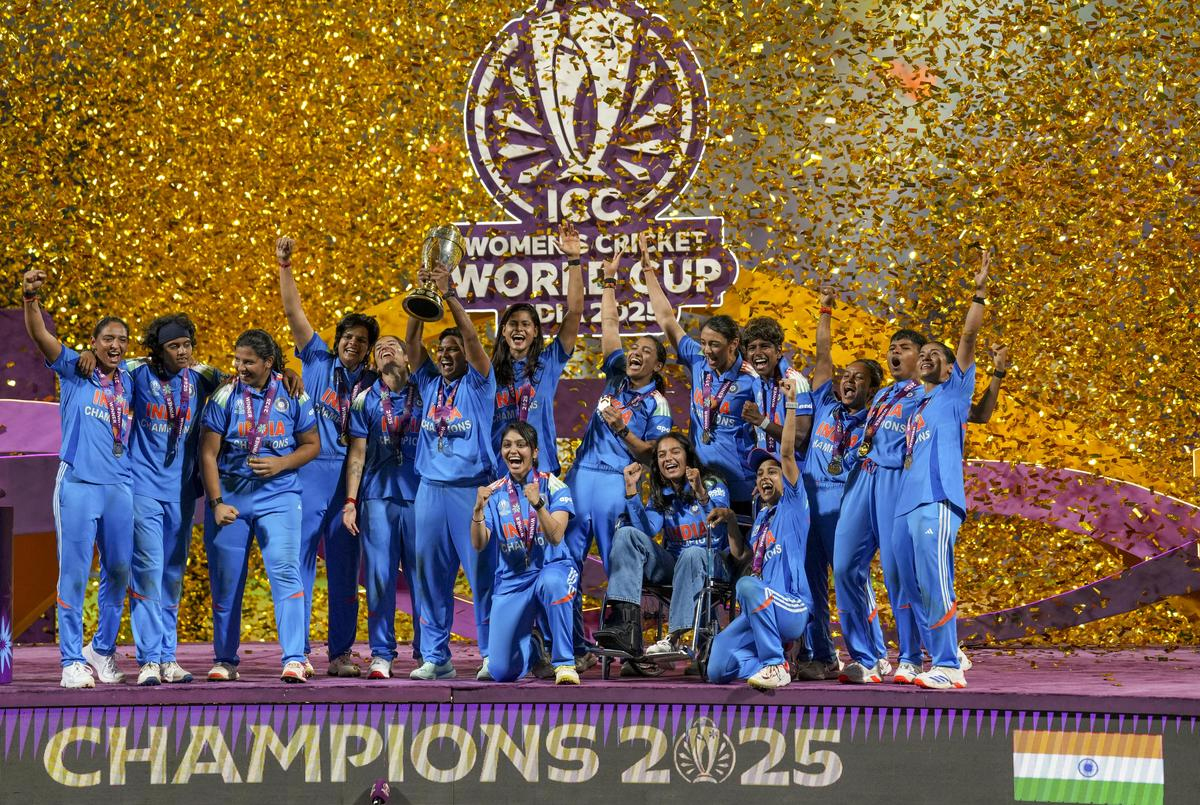
The men’s side triumphed in the Champions Trophy (ODI) and the Asia Cup (T20), while the women brought home a maiden 50-over World Cup.
But a 0-2 hammering at the hands of against South Africa in Tests laid bare India’s shortcomings in the red-ball format under feisty head coach Gautam Gambhir, who was his usual combative self in both triumph and debacle.
Why is it important to dwell on a lone glitch when the rest of the year largely produced glitter?
A glance back to the 2024-25 Border-Gavaskar Trophy is essential to find an answer.
The 1-3 series defeat saw the Test careers of Virat Kohli and Rohit Sharma coming to an end, and India had already lost R Ashwin to retirement midway through the tour Down Under late last year.
Rohit and Kohli’s ODI future remained a talking point through the year even though the two made it clear that they are here to stay by showing up in domestic matches as mandated by the BCCI.
Another Test stalwart Cheteshwar Pujara too formally retired from international cricket, leaving a gaping hole in the middle order that is now struggling to find a sheet anchor.
India scaffolded their journey in the new World Test Championship (WTC) cycle (2025-27) on new captain Shubman Gill and a clutch of rising stars and the results so far have been mixed at best.
The beginning was bright.
A rather young India side drew the five-match away series against England 2-2 with Gill leading from front. He made 754 runs at an average of 75.40 with four hundreds, the second highest run-tally for a captain after Don Bradman’s 810 in the 1936-37 Ashes.
Riding on the initial wave, India expectedly towelled the West Indies (2-0) at home and it seemed they had embraced a new era without much fuss.
But then fortunes can swing wildly in the longest format.
SA debacle
========
A wily South African off-spinner, Simon Harmer, mercilessly cut the chord of India’s chandelier of optimism. Better prepared, and more settled Temba Bavuma’s Proteas ended a 25-year wait to pull off a Test series against India.
And it did not feel like an isolated act either. Last year, the Indians had caved in similarly against New Zealand spinners at home.
The twin failure exposed an obvious chink in the armour against spin.
It was a painful deviation from the past when some of the greatest spinners in the history of cricket had to return with bruised egos and stats from these shores.
But, now, even a set of above average spinners could outfox the Indian batters, as even a meagre target like 124 ended up being unachievable for Indians.
India are already down to sixth in the WTC points table and with tough tours to Sri Lanka and New Zealand lined up in 2026, a final spot in the cycle now appears a vastly distant stop.
If India do not do a big-picture thinking on players and combinations now, the next 12 months too could be heart-breaking in the traditional format.
Kings of white ball formats
==================
But the other side of the revolving door that opens to the glitzier world of white ball cricket remained quite glossy.
India went through the ICC Champions Trophy in Dubai and then later in the Asia Cup at the same venue undefeated, underlining their dominance in ODIs and T20Is at least in this part of the world.
Those triumphs also gave Gambhir some bargaining space after a poor run in Test cricket.
If the performances of 2025 can be taken as a yardstick then fans will have a lot to look forward to in 2026 as well, as men’s and women’s teams are bracing for T20 World Cups.
Winds of change
============
In one way, the year belonged to women cricketers. The Under-19 side defended its T20 crown in February to set the tone for the rest of the year.
Despite the obvious talent, the women’s senior side has always struggled against Australia, New Zealand and England in global tournaments.
But in this edition of the 50-over World Cup, the Harmanpreet Kaur-led India took down Aussies and Kiwis and eventually overcame South Africa in the final to land their maiden ICC title.
The landmark victory has already brought in a fee hike in domestic matches by BCCI and fresh endorsements to players — clear portents to an even brighter future for women’s cricket that once struggled for money and attention.
Off the field too, it was a year of change.
Former Delhi cricketer Mithun Manhas replaced Roger Binny as the BCCI president along with some new names.
Several other state associations too witnessed regime change as a few former cricketers like Sourav Ganguly and Venkatesh Prasad returned to administrative roles.
No handshakes with Pak
===============
The turbulent diplomatic ties with Pakistan simply nosedived after the Pahalgam terror attack and a brief military operation after that. The resonance of the upheaval was felt on the cricket field too.
Indian cricketers, on the directions of the BCCI, refused to shake hands with their cross-border opponents during the Asia Cup. They also did not accept the winners’ trophy as it was to be presented by a Pakistani, Mohsin Naqvi.
As a result, Naqvi, who heads the Asian Cricket Council, and the Pakistan Cricket Board besides being the internal affairs minister of his country, has locked up the silverware at the ACC office in Dubai. He has also made it clear that he would only hand it to the Indians in a media-covered ceremony.
Tears of sorrow
===========
Royal Challengers Bengaluru ended their 18-year wait for an IPL trophy in 2025, but that epic triumph soon became a tragedy as 11 fans were killed and 56 others were injured in a stampede near the M Chinnaswamy Stadium during the franchise’s celebrations.
Chinnaswamy has not hosted a game of significance after that.
The RCB team management has been left to take the bulk of the blame for the tragedy after urging fans to come out in hordes despite not having the requisite security clearances to carry out the celebrations.
The whole episode brought to light the need for better crowd management, and the lack of facilities for spectators at Indian venues. (PTI)
 Follow our WhatsApp channel