Excelsior Correspondent
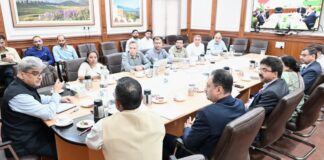
JAMMU, May 26: Government Degree College (GDC) Surankote has signed a historic Memorandum of Understanding (MoU) with The Energy and Resources Institute (TERI) New Delhi, becoming the first Higher Education Institution in Jammu & Kashmir to do so.
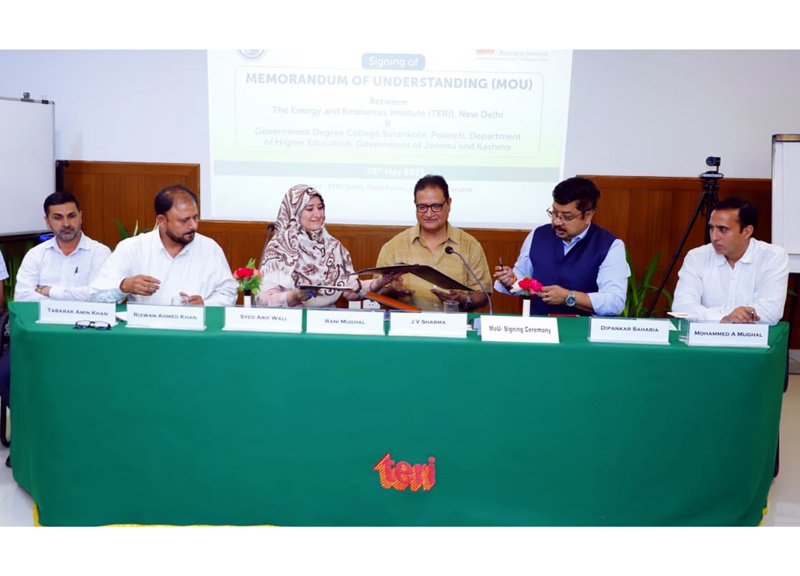
The agreement, signed today, marks a significant step toward fostering academic exchange, research collaboration, and environmental innovation in the region. The MoU was signed by Prof (Dr) Rani Mughal, Principal of GDC Surankote, representing the J&K Higher Education Department, and Dr Dipankar Saharia, Senior Director-Social Transformation & Strategic Alliance, TERI New Delhi.
The signing ceremony was witnessed by Dr J V Sharma, Program Director Waste, Water and Natural Resources Program & Senior Director, Land Resources Division, Dr Syed Arif Wali Associate Director, Land Resources Division TERI, Prof Rizwan Ahmed Khan, HoD Physics, GDC Surankote, Dr Mohammed Ashfaq HoD Geography, GDC Surankote, Dr Tabarak Amin Khan, HoD Economics, GDC Surankote.
This achievement is especially momentous because TERI is India’s foremost institute in the field of sustainable development, environmental research, and climate policy. TERI is internationally renowned for its role in shaping green energy solutions, advising global institutions, and leading innovation in ecological conservation.
Its collaboration with GDC Surankote not only validates the College’s growing academic vision but also positions it at the forefront of environmental education in the Pir Panjal region. Under the agreement, both institutions will engage in joint research initiatives, joint publications for any research outcomes, engaging faculty of GDC Surankote as experts or team members in TERI’s projects, etc.
Speaking on the occasion, Prof (Dr) Rani Mughal said, “This partnership with TERI is not just a formality, it is a mission. From the fragile ecosystems of Pir Panjal to the global urgency of climate action, our students must become the torchbearers of sustainability. With TERI’s support, we aim to transform this remote institution into a hub of ecological innovation and resilience.”
 Follow our WhatsApp channel