

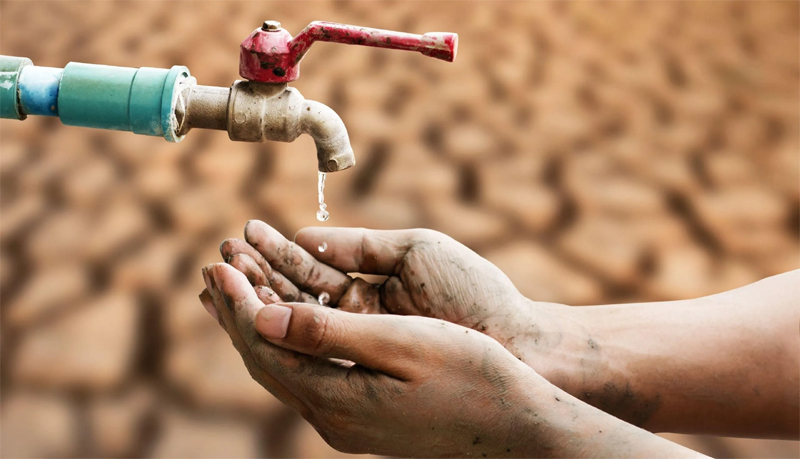
Every summer, like clockwork, the Jammu division descends into a water crisis. And every summer, the same assurances are issued, the same departments point fingers at each other, and the same citizens queue beside tankers under a punishing sun. It is a scandalous annual ritual born of administrative indifference and institutional failure. From the congested lanes of Jammu city to the parched Kandi belts, not a single district has been spared. Residents go without water for days at a stretch. In the rural belt, women walk kilometres to fetch water. In hilly areas, people have abandoned faith in the system altogether, falling back on centuries-old springs and bowlies. The tall claims of schemes and missions collapse within the very first week of peak summer, exposed by the simple, unforgiving test of public need.
Two departments – Jal Shakti and the Power Development Department – share responsibility, yet neither accepts accountability. The Jal Shakti Department blames erratic power supply for its inability to run pumping stations. PDD, meanwhile, continues with its unscheduled curtailments. Passing the buck has become the default response. Citizens, however, are not interested in this bureaucratic theatre. They want water.
The Jal Jeevan Mission stands thoroughly discredited in much of the Jammu division. Crores of rupees have been spent, yet overhead tanks lie cracked, sump tanks are unused, and filtration plants have failed. Substandard construction has been the rule rather than the exception. These are not aberrations – they are symptoms of systemic corruption and negligence that no one has been held accountable for. All schemes must be urgently audited, substandard work identified, and contractors penalised. The relentless dependence on groundwater is itself a policy failure. Tubewells are running dry across the region in increasing numbers each year. This is not a long-term solution; it is an accelerating problem masquerading as one. Policymakers must abandon this approach.
The answer lies with the Chenab. The Akhnoor-Jammu Chenab water supply project, transferred from ERA to JMC, remains in files only. With the Indus Waters Treaty in abeyance, there is no legal barrier to drawing upon the Chenab to meet Jammu’s needs. A well-executed, long-term surface water project of this scale would resolve the crisis once and for all. It demands political will and a one-time investment – both entirely within reach. Jammu’s thirst is not a geographical inevitability. Correct the power supply. Revive the failed schemes. Invest in the Chenab solution.
 Follow our WhatsApp channel
